


Last week, the American Association of Political Consultants Foundation released the first national survey of likely voters on how they use AI for election information. I was surprised by the results because adoption and trust were both lower than I expected.
Before we dive into some of the specific numbers, I think, as campaigners, we have to interpret the data selectively. For example, voters consistently tell pollsters and focus group leaders they dislike negative political ads, but when we measure the results they are still the ads that work. What voters say about AI and what they actually do with it or how they react to it are fundamentally different things.
AI Is Already Answering
Although few voters (4%) reported seeking election information from AI in the last month, 38% say they’ve gotten it anyway thanks to Google’s AI summaries present on most search pages. Only about half of them realized they were AI generated.
Now’s a good time to check what AI is saying about your campaign as these answers surface in other, unexpected places for voters.
Accuracy & Trust
According to the survey, voters don’t think AI provides accurate information when it comes to elections, mostly because they say it doesn’t show its work. But anyone with any experience level with AI knows that citations and links are infused in every answer, including when it comes to information about candidates and elections.
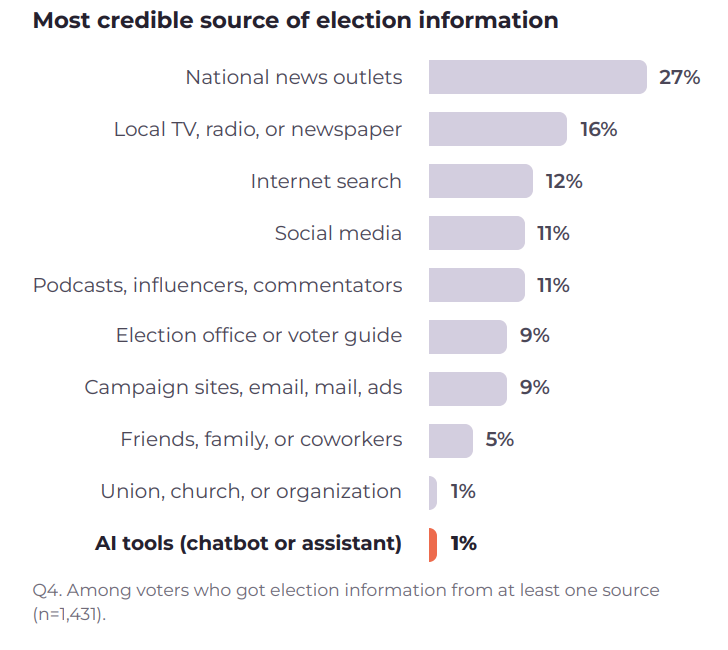
One helpful finding is that campaign websites rank second behind local news as the source voters trust most when deciding who to vote for. That’s more than search engines and social media. A consistent theme emerging this cycle is the importance of having easy-to-read About and Issues pages on your campaign’s own website.
Social Media All Over Again
The most shocking finding in the survey is that 11% of respondents said social media was the “most credible source of election information” compared to just 1% for AI. Again, anybody with real experience with both social media and AI ought to laugh. But voters are clearly reacting to something about the novelty of AI.
We’ve lived with social media and campaigns for almost two decades so voters have adapted. I suspect if we tracked down similar polling at this stage in social media adoption, we’d see similar levels of distrust about accounts impersonating real politicians.
Where Voters Draw The Line
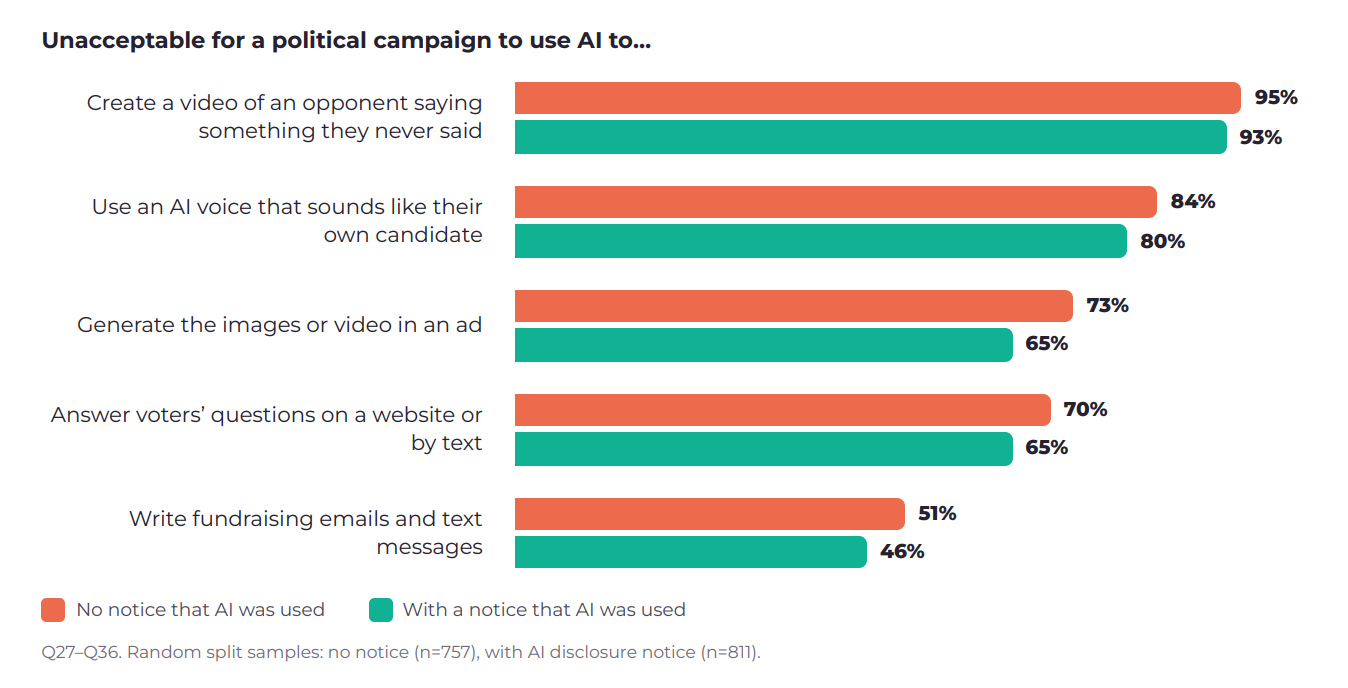
Voters thought that most uses of AI-generated media should be off-limits for campaigns, but they also opposed even mundane uses of AI. Seventy percent (70%) said it was “unacceptable” for a campaign to use AI to “answer voters’ questions on a website or by text” and 51% similarly opposed using AI to “write fundraising emails and text messages.”
Disclosure Isn’t A Solution
Most of the laws around AI in campaigns are focused on disclosing its use, but the data show it doesn’t drastically improve voters’ opinions. In practice, disclosure might actually just draw attention to the use and undermine the campaign’s efforts.
Conclusion
Two takeaways from campaigners from this survey in the final days of the midterm elections:
- Whether they realize it or not, AI is shaping voters’ information landscape about this election, so your campaign needs to treat the models as media outlets to monitor and guide.
- Voters don’t really know what to think about AI when it comes to elections but are, on the whole, skeptical, so keep your use responsible and behind the scenes.